In the 2025 film Life of Chuck, adapted from a novella by Stephen King and directed by longtime collaborator Mike Flanagan (The Haunting of Hill House, Doctor Sleep), audiences are taken on an unexpected, poignant, and deeply human journey. At first glance, it feels like an end-of-the-world story. But the apocalypse turns out not to be global. It’s deeply personal. This is not a story about the destruction of Earth. It’s about the quiet, breathtaking implosion of a life. One life. Chuck’s life.
Yet that’s the brilliance of the film Life of Chuck dares to suggest that the end of one person’s existence can be just as vast, as powerful, and as seismic as the end of everything.
A Life as a Universe
The narrative unfolds in reverse, beginning with the apparent collapse of the world around us. Cities empty, nature reclaims concrete, and a creeping silence settles over humanity. It is as if the universe is winding down. But gradually, Flanagan and King reveal the truth: this isn’t an extinction event in the traditional sense. It’s the slow unwinding of Chuck’s internal universe. His thoughts, his memories, and his connections all fade into the cosmic ether as he dies.
This metaphor, that each of us contains an entire world, is a radical but resonant concept. The loss of a single life doesn’t just extinguish a heartbeat. It silences an entire history. In this way, Life of Chuck becomes a meditation on mortality and the sacred nature of individual experience.

Embracing the Ephemeral
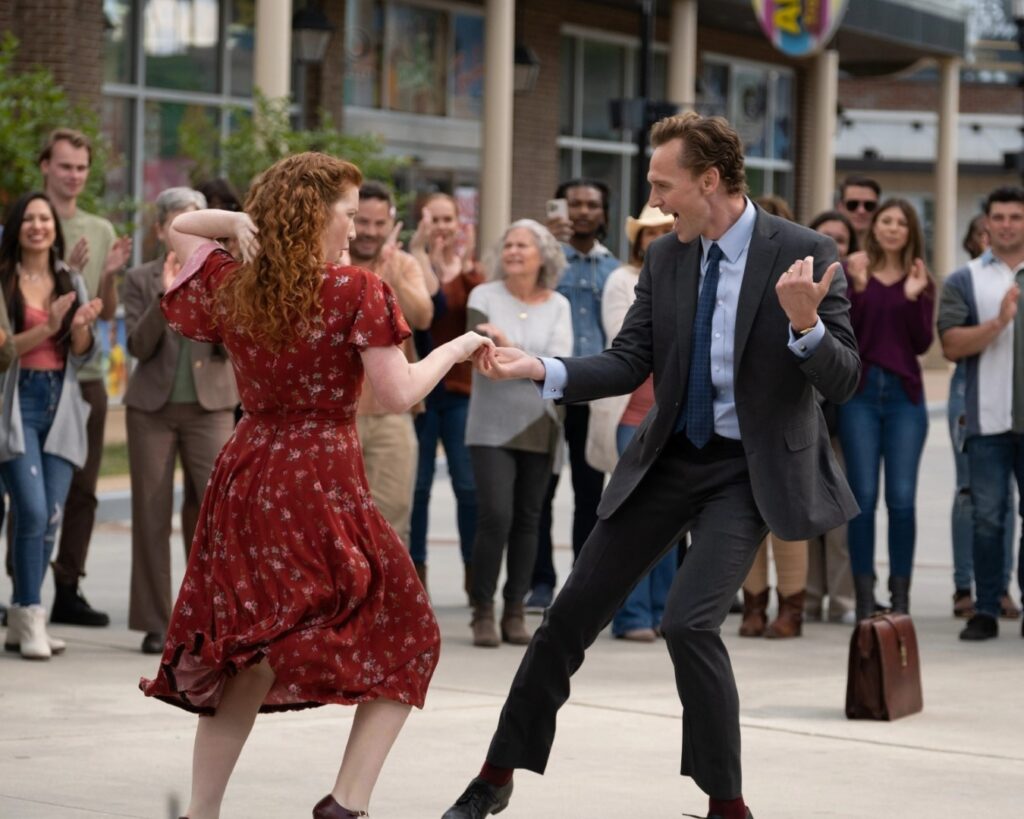
The beauty of the film lies in its ability to invite reflection without dictating how you should feel. It doesn’t present life as something to master or conquer, but rather as something to experience. There are no big speeches about success or legacy. Instead, we see Chuck dancing in the rain. We see him sharing a quiet moment with a stranger. We see him as a child, seeing his grandfather’s house through fresh eyes. These moments are the film’s heartbeat.
Walt Whitman’s Song of Myself weaves itself through the narrative, most notably the line: “I am large, I contain multitudes.” This theme ripples through every interaction Chuck has. In Chuck, we see a man who is many things. Like all of us, he is a living mosaic of contradiction and complexity. He has made mistakes, he has made people laugh, and he has held onto moments no one else remembers. The film insists that all of these layers are real and worthy of attention.
The End of a World
The final act reveals the film’s central truth: the apocalypse we’ve been witnessing is the fading of Chuck’s consciousness, his life. The world didn’t end. Chuck’s world did.
It’s a gut punch. One that lands not with horror but with aching sadness and reverence. And for those who have lost someone close, it’s hauntingly familiar. The world keeps turning, but your world feels like it stopped. A person is gone, and with them, a universe.
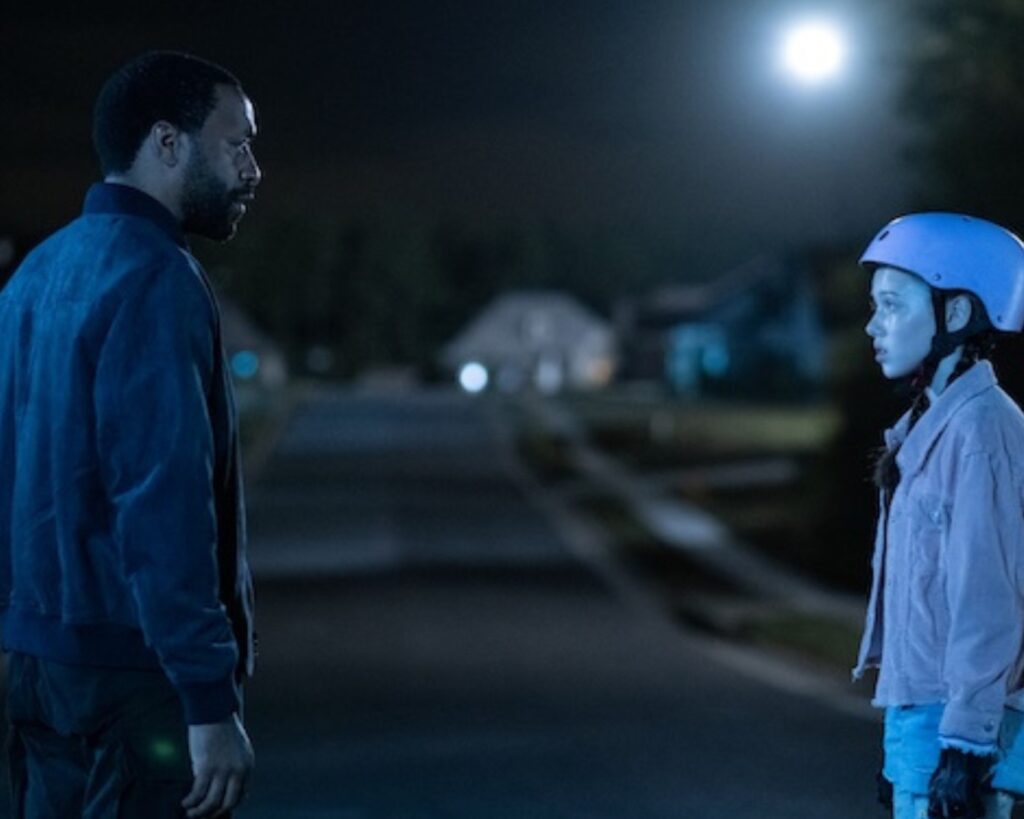
The death of Chuck is less about finality and more about transition. It invites viewers to confront the discomfort so often avoided in Western culture. The question of what happens when we die, and more pressingly, what happens when we live fully. Life of Chuck doesn’t offer easy answers, but it does offer presence. It nudges us to stay awake, to not drift.
The Importance of Moments
What the film captures with disarming clarity is the idea that small moments are the ones that matter most. The smile from a child, the warmth of shared silence, the thrill of a spontaneous decision. These are the brushstrokes of a life portrait. No one speaks about Chuck’s job title. No one recites a list of achievements. The legacy of Chuck is found in his relationships, in his laughter, and in how he made others feel.
This idea connects Life of Chuck with films like Boyhood, which chronicles a life through ordinary moments, or The Secret Life of Walter Mitty, where a mundane existence hides extraordinary inner landscapes. The Curious Case of Benjamin Button and The Green Mile explore time, memory, and the weight of connection. The Shawshank Redemption, another King classic, reminds us that hope is often hidden in the smallest acts. My Old Ass and The Ballad of Wallis Island tackle youth and aging with poetic intimacy. These films, like Life of Chuck, whisper the same truth: the magic is in the moments.
Talking About the Hard Stuff
What makes Life of Chuck so impactful is also what might make some viewers uneasy. We live in a culture that fears stillness and avoids the topic of death. Conversations around endings of lives, eras, or relationships are often seen as morbid or taboo.
But King and Flanagan insist that this discomfort is worth confronting. By acknowledging our mortality, we don’t invite despair — we invite urgency. The urgency to live fully, to connect deeply, to see beauty even in brokenness. If we never face the idea that it all ends, we risk never really beginning.
Stellar Casting
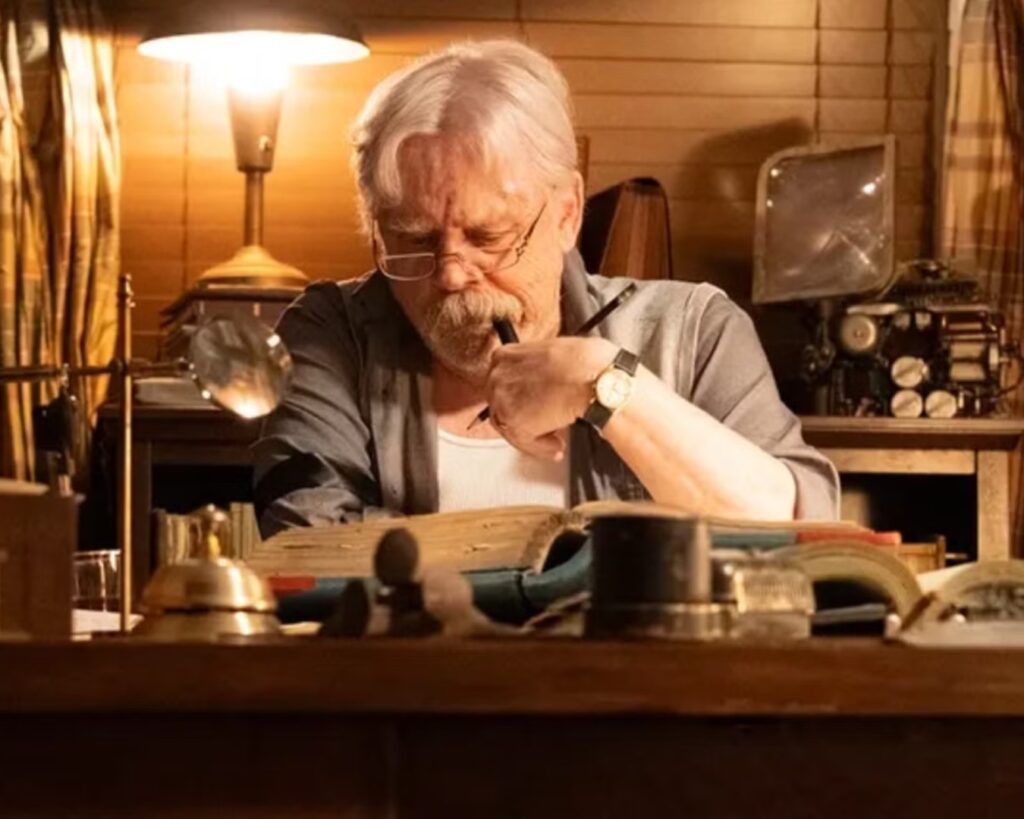
The cast of Life of Chuck brings extraordinary depth and vulnerability to a story that hinges on its emotional resonance. Tom Hiddleston, portraying Chuck, delivers a performance that is both quietly powerful and heartbreakingly human. He captures the many shades of Chuck’s life with a nuance that makes every moment feel lived-in. Mark Hamill, cast in a pivotal supporting role, brings gravitas and warmth, embodying a figure who helps anchor Chuck’s experiences in memory and meaning. Together, they illuminate the idea that every interaction, no matter how fleeting, adds to the fullness of life.
Adding a unique layer to the film is the narrator, voiced by Nick Offerman. The narration serves as a bridge between scenes, gently guiding the audience through the fragmented timeline of Chuck’s life. Rather than offering exposition, the narrator feels like a caretaker of memory. It’s a role that elevates the film from a traditional narrative to something more reflective and meditative, inviting the audience to become both witness and participant in the celebration of one man’s universe.
Ask Yourself This
To watch Life of Chuck is to reflect on your own story. It challenges you to consider what your universe looks like. What multitudes do you contain? What moments are shaping your legacy? Who will feel the end of your world when your time comes?
If you’ve ever loved someone, lost someone, or feared that you’re letting life slip by, then this film is for you.
It reminds us that the goal is not to live forever. The goal is to live now.

Isabel Donadio is a Freelance Writer, Bestselling Author, Publisher of Bestselling Books the world around, and the Founder of Top Talent Agency.