

In Southern California, where creativity often takes the shape of polished productions and star-studded ambition, Diane Strand’s work is rooted in something more grounded. Her focus isn’t fame or spectacle, it’s access. More specifically, Strand’s mission has been to create practical systems where the arts serve as a channel for career training, education, and inclusion. With a background that spans media production, nonprofit development, and community programming, she has helped shape initiatives that connect people, many of whom are often excluded from traditional paths, with creative tools and real-world experiences. Through hands-on instruction, collaborative productions, and partnerships with local organizations, her programs offer more than just exposure to the arts. They offer structure, application, and a tangible way forward.
JDS Creative Academy: Teaching Skills Behind the Scenes
Tucked away in Temecula, JDS Creative Academy might resemble a typical arts center at first glance. But a closer look reveals a space where students aren’t just exploring creativity, they’re developing technical skills in areas like video production, stage design, camera work, and digital editing. Strand’s Academy runs courses in visual, performing, and digital arts. These are not limited to young children or beginners. Youth, teens, and adults all participate in project-based learning environments that focus on building competencies relevant to the media and entertainment industries. Unlike programs that focus on theory or isolated instruction, this one integrates students directly into the production process, from scripting and directing to editing and publishing.
Some students contribute to full-scale productions that are later aired or streamed. Others support live events or submit their work to local media festivals. These experiences not only build portfolios but also expose students to the collaborative, deadline-driven nature of real production work. The Academy emphasizes “learning by doing” as a foundational approach, a key element in preparing participants for both creative and professional outcomes.
A Program for Adults with Disabilities — Rooted in Production, Not Pity
In 2017, a conversation at a local Chamber of Commerce event introduced an unexpected collaboration. The Inland Regional Center, an organization supporting adults with intellectual and developmental disabilities (IDDs), approached Strand about working together. Though she hadn’t planned for it, she agreed to explore the idea. The result was the launch of the Title 17 Video Production Day Program, developed under California’s Department of Developmental Services. Officially beginning in 2018, the program was designed to provide adults with IDDs practical training in multimedia production, communication, and job-readiness skills.
Unlike many programs that isolate participants from industry-level work, this one is integrated into the larger operations of JDS Creative Academy. Trainees learn how to use professional video equipment, lighting systems, editing software, and audio tools. They also build soft skills like collaboration, time management, and on-camera confidence.
Crucially, the participants are not placed in simplified or staged environments. They are expected to engage with the same equipment and standards used in the Academy’s media projects, including a local television show. This has allowed some to transition into internships, paid roles, or further education. Others have used the program to build confidence and structure for personal development. The initiative’s success lies not in charity, but in expectations. It offers the same opportunities — and the same responsibilities — as any training program, creating a space where ability is supported through access and expectation.
Spirit of Innovation: A Local Show with a Dual Purpose
One of the central hubs tying these efforts together is Spirit of Innovation, a magazine-style television series developed by JDS Studios. The show highlights regional stories, small businesses, educational features, and creative projects from around Riverside County and beyond. What sets it apart is not just its content but its function as a learning platform. Participants from both the Academy and the Title 17 program contribute to the production process. Some are behind the camera, others in the editing suite. Some help with lighting and audio. A few even help script and produce individual segments.
This dual-purpose model allows the show to serve both the audience and the trainees. It creates a professional environment where students can apply what they’ve learned while building something that is broadcast to the public. In doing so, it reinforces the real-world stakes and standards associated with creative work and gives students a product they can showcase on resumes or reels. Now in its seventh season, Spirit of Innovation has become a centerpiece of the ecosystem Strand has helped build. It’s also one of the few broadcast programs in the area made with active community involvement.
DigiFest® Temecula: Putting Local Creators on the Map
Another project that illustrates the Academy’s commitment to application is DigiFest® Temecula, an annual festival that celebrates digital media and the creative arts. The event invites filmmakers, digital artists, photographers, animators, and content creators to submit their work for judging, display, and public engagement. For many JDS participants, DigiFest becomes both a goal and a gateway. It gives students a reason to complete polished projects and a venue to showcase their work to an audience that includes educators, peers, and industry professionals.
The festival includes panels, presentations, and workshops, helping bridge the gap between learning environments and creative careers. Though regional in scope, it provides access to conversations and critiques that are often out of reach for emerging creators. Past winners have used their festival recognition to support college applications, freelance portfolios, or internships. For others, DigiFest provides a sense of momentum — proof that their work can be seen, shared, and celebrated.
Arts Across America: A Coaching Model for Program Expansion
In 2024, Diane Strand introduced Arts Across America, an initiative designed to expand access to arts-based programming by helping others build similar structures in their own communities. Structured as a coaching and resource platform, the program offers curriculum templates, training models, grant strategy, and operational support for those seeking to replicate or adapt the JDS model. Whether for nonprofit leaders, educators, or small business owners, the goal is to provide a blueprint for arts integration that is practical and customizable.
This marks a shift from local implementation to national engagement. Arts Across America is not positioned as a franchise, but as a flexible framework. Participants can adapt it to fit their own community needs, with guidance on funding, staffing, and program design. The initiative reflects growing interest in creative entrepreneurship and alternative education models. It also underscores a core principle behind Strand’s work: that creativity, when structured intentionally, can support both personal development and economic opportunity.
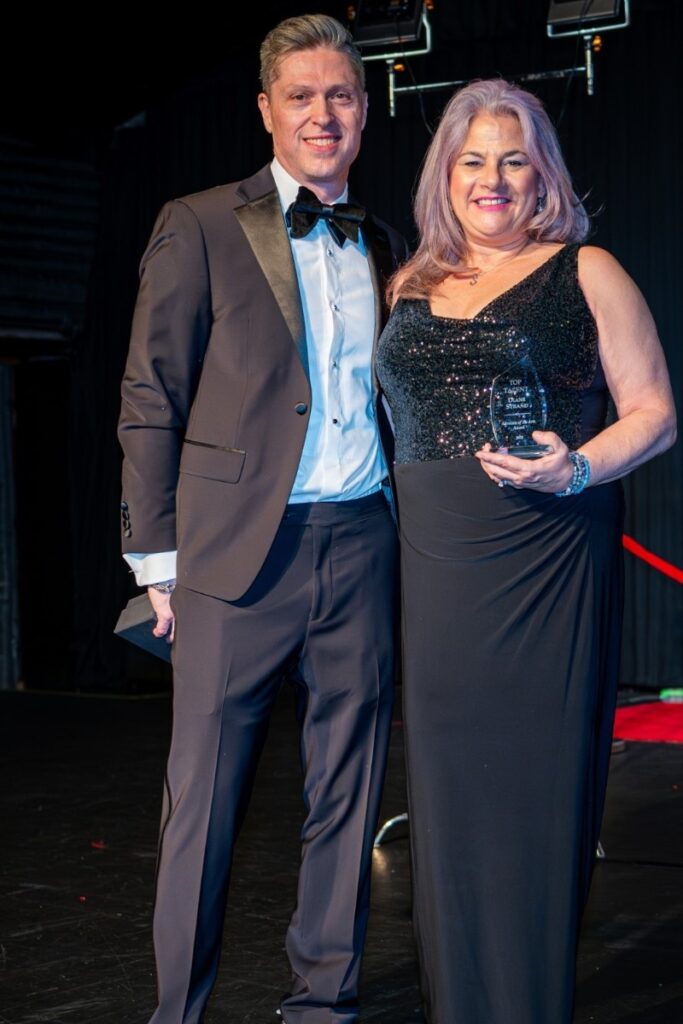
Adding to her many accolades, Diane Strand was awarded the Advocate of the Arts Award by David T. Fagan at a red carpet media event in Hollywood earlier this year. “Art belongs to everyone,” Strand says. “Our job is to remove the gatekeeping and create platforms where people of all backgrounds can thrive.”
A TEDx Message That Connects the Dots
Strand brought her approach to a wider audience through her 2023 TEDx talk, “Empowerment Through Creative Pathways.” The talk focuses on the role creativity can play in workforce development and inclusion, especially when supported through hands-on instruction and collaborative platforms. Drawing from real examples within her programs, Strand outlines how structured creative training can support individuals who may not thrive in traditional classrooms or job pipelines. She speaks about the use of storytelling, video production, and technical training as practical methods for building confidence and competence.
Rather than emphasizing abstract concepts, the talk walks through implementation. It focuses on what it looks like to create space for creativity, not as a reward or luxury, but as a working part of community infrastructure.
What’s the Bigger Picture?
Across all of these efforts, one common theme emerges: the idea that creative training can be both expressive and functional. Whether through theater, video, or digital storytelling, the programs aim to teach not just technique, but application. Strand’s ecosystem doesn’t rely on high-end equipment or celebrity endorsements. It relies on curriculum, repetition, mentorship, and opportunity. The outcomes vary — some participants enter the workforce, others gain confidence, and many do both. Importantly, the programs avoid overpromising. They don’t claim to turn everyone into an artist or an entrepreneur. They simply create conditions where learning, creativity, and real-world practice intersect.
A Framework, Not a Formula
Rather than being a personality-driven mission, Diane Strand’s work reflects a structural approach. Through years of experimentation, collaboration, and iteration, she has developed a network of programs that are consistent in their purpose: to use the arts as a way to teach, train, and include. The model doesn’t rely on charisma or catchphrases. It depends on systems that work: creative learning connected to tangible outputs, structured environments that support both individual growth and community impact. In a time when both education and employment systems are being reexamined, this framework offers a middle ground — one that’s practical, inclusive, and adaptable. Whether or not it can be scaled nationally remains to be seen, but in its current form, it provides a clear and grounded example of how art can function as more than expression — it can serve as infrastructure.
Learn more jdsstudio.live or connect with her directly on social media @dianestrand.

Diana Murua is a journalist and freelance writer, passionate about telling powerful stories and highlighting people making a meaningful impact in the world.